

|
1956: now what would have been the most important items in life at that time? For that matter, what was life like at that time? Maybe something of a résumé is in order.
I was 13. I went to the Grammar School – Lancaster Royal, of course – henceforth “LRGS”. Why say “of course”? Well, it’s funny how things were so self-obvious in those days. One knew nothing of the War, though I’d been born, just over a decade before, right in the middle of it, just as it got so fatally chilly for the Germans in Stalingrad. The War was just a fact and a factor occasionally talked about by grown-ups in grave tones, when discussing the problems of the day. One lived through rationing, and hated powdered egg and any derived concoction (like gritty “scrambled egg”). One religiously saved any rubber band, string, brown paper from parcels, and added any nut or bolt one found by the roadside to the jam jars in Dad’s garage. One still does, actually, though the jars are in one’s own garage these days; force of habit. And people think “recycling” is a new fad….. All so obvious then. No choice in those days. Perhaps it was better that way.
One went to Primary School (Skerton). There wasn’t any other choice, and few enough teachers even to run those schools which were available. And of course one learned how to add up pre-decimal currency in one’s head. “Come on children.” Miss Brown would say, “It’s nice and sunny outside, so we can take our shopping out into the playground.” Groans all round. Not that we disliked playground or sun, but “shopping” was that nightmare lesson where we visited the “shop” (a desk laden with empty packets of domestic items) and had not only to work out in our heads the cost of three boxes of soap flakes at 2 shillings and threepence threefarthings each plus a twopence halfpenny lollipop, but also tell Miss Brown what the change would be from three half-crowns. 1 God, I break out in a cold sweat even now at the thought of it – she could be really sarcastic, Miss Brown, when you got it wrong. A real leveler, Skerton County Primary School in the early ‘50s (it’s now, God forbid, a walled off enclave in “The Skerton Learning Centre”). It took in an interesting mix of kids from backgrounds of the professions, trades, local industry, local shops, the Ramparts and nearby streets – and from gypsy families. That list roughly represented a descending order of likely academic prowess, and ascending order of aggressive nature. This blend of cultures certainly contributed to a full education – not just the three ‘Rs’ but also self-defence and keeping your mouth shut and your head down.
I really pity the kids of today, unable to enjoy (or not allowed) the freedom of walking home from school, and condemned to the unhealthy transports of Mummy’s car. Note, incidentally, walking HOME from school. From 8 years old, I ceased to walk TO school: instead, I went on the back of Dad’s motor bike! “We’re all going to draw a nice picture today of our favourite present at Christmas.” said Miss Rogerson, one day in January 1953. (Funny, we never got to see her picture of HER favourite present, but that by the way…...) So I drew a rough, but recognisable picture of Dad handing me a sizable, brown-paper-wrapped cube. Miss Rogerson frowned ever so slightly, when commenting on my masterpiece to the class, and asked gently if we might be told what was actually in this package which made it so favoured. Her frown deepened quite violently when I said “A pillion seat for the motorbike, Miss!”, perhaps a shade too chirpily. This was apparently neither comprehensible, nor of any interest for the class, for Miss Rogerson went on abruptly to review Judith Weaver’s depiction of her pretty new Christmas dress. These events shape you, you know, and I still think it was unfair discrimination. After all, what better Christmas gift than a brown-paper-wrapped motorbike pillion seat on which I could sit every morning, and what better link than that I should sit on it on the way to the school for which I had drawn the picture? Ah well, if they won’t recognise genius …..
Anyway, as I was saying, I walked home from school – rain or shine, as I remember. Turn left out of the school gates, along Main Street, above the Ramparts, quickly past the gypsy caravans near the Royal Oak - all chrome plating, washing lines and snarling dogs - then down past the little shoemaker’s shop opposite the pub 2 to Skerton Mill and Halton Road. Up the hill past John O’ Gaunt Rowing Club, maybe call in at Eric Johnson’s house (he later went to LRGS too ) 3 . On past Mount Avenue, Whalley Road and Green Lane through the dip, past the piggeries on the right 4 and the hockey pitch on the left towards the Canal Bridge 5 . Hang over the rounded wall at the top of the bridge for a moment to watch the sticklebacks in the clear water, before the dash down to Carus Park, where we lived.
 |
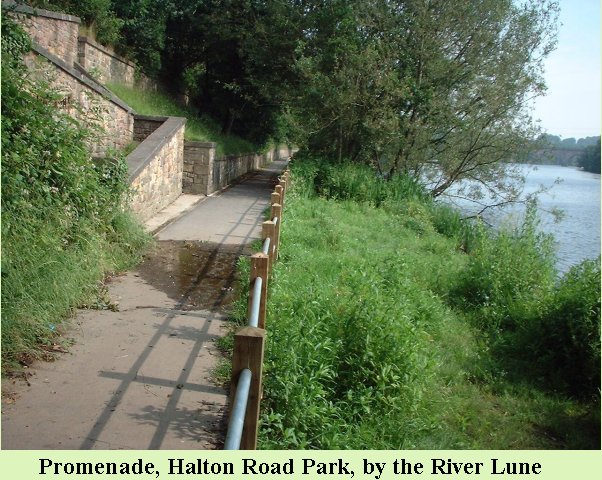
Returning to my walk home from Skerton School: the route described is a good walk, a mile and a quarter or so, even today – but nothing even faintly unusual for a 7 year old in those days. In truth that was actually the route Mum thought I used to walk home. If it wasn’t raining, I often went down the path just after the John O’ Gaunt Boathouse onto the “Promenade”, a couple of hundred yards of concrete path right by the River Lune, looking out to Skerton Weir and Lansil and the other factories on the other bank. I neither realised then how significant that Promenade would become in later, LRGS Boat Club, life, nor did I especially care for the view. The fascination was the slimy, mossy stretch of concrete – unchanged today - where water drained over it from the Park into the River. I could slide and pretend-skate there – marvelous
 |
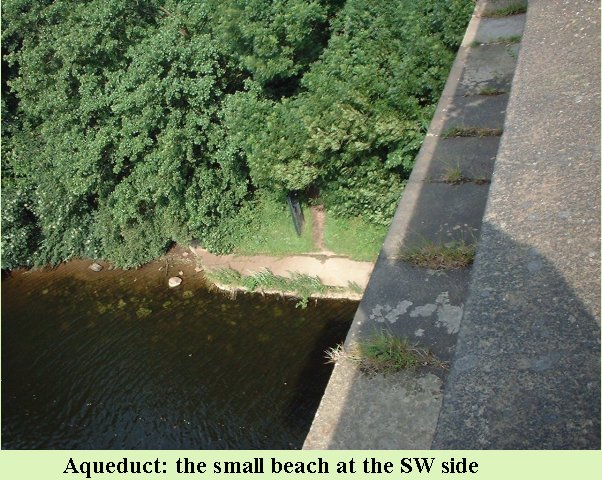 |
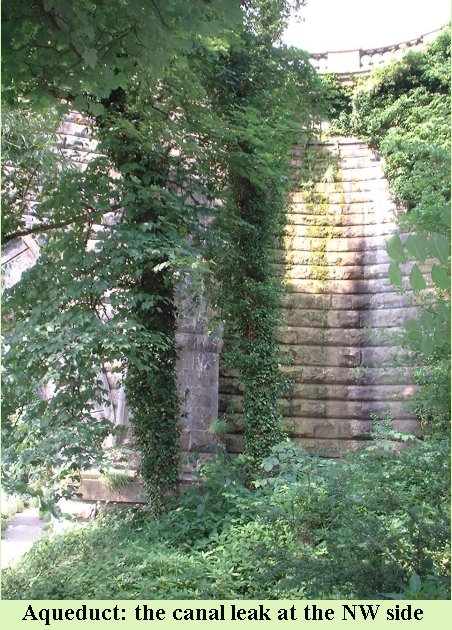
Just as an aside, if you walk from that little beach upstream through the Aqueduct arch and look up at the stonework forming the landward edge of that arch, you’ll see that the canal is leaking! In fact, it has leaked there as long as I remember. One of my earliest memories is of a night in late Spring 1947. It had been a ferociously cold Winter and early Spring, and the canal, river, household pipes – everything had frozen. So had the water leaking down that stonework. Over the months, an enormous shell of ice, many feet thick formed as more water trickled out of the canal.
 |
Well, anyway, to get back on topic, midway through the sixth year at Skerton, two in the “Primary School” and four in the “Junior School”, the 11-plus came along. The actual examination was held in the Girls’ Grammar School – the first of only two times I ever went there. A fair number of us from Mr Gates’ final year class found we’d passed, and would be going to the Grammar School from September 1954. The problem was that this news came in March, but we were still at Skerton until July. Immediate chasms opened up in the class, and the Summer Term was difficult. The jibe “Grammar Snob” was leveled. Didn’t know what it meant – I guess our existence was too youthful and sheltered to understand why a Secondary Modern school – the alternative for those who failed the 11-plus - should be so different. So many chums just weren’t any more. There was Maly (Malcolm) Gates, our School goalie, Malcolm Finnerty, called “Fidgety” by our teacher, Mr. Gates; he was no relation to our goalie, but, was, I found out later, Brian Gates’s father; Brian became Second Prefect at LRGS.) Then there was Trevor Allinson, who’d acted such an eloquent bush of the thorn hedge in our production of Sleeping Beauty, Ronald Hartley, Ian Boow, Valerie Lennon and Celia Bottomley: why didn’t they talk to me any more?
 |
Anyway, leaving Skerton behind, what did dear diary reveal as the most important things in life in January 1956? First and foremost seems to be “73010 on 8:45 ”. Now, you’re going to have to get used to this. OK, everyone has a form of code for their diary, but there’s a fair chance that only a privileged few of my former classmates at LRGS would understand this entry! How come? Because we were the trainspotters.
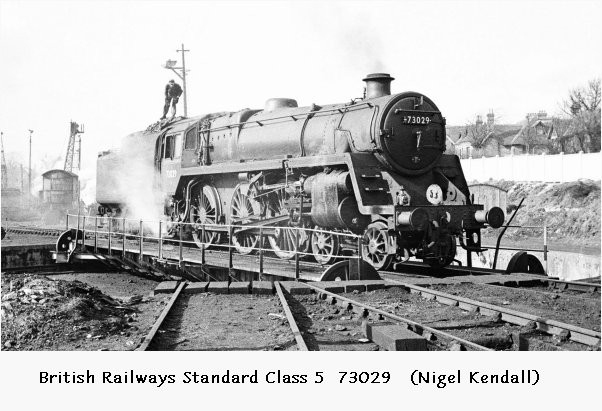
“73010” is easy to explain. British Railways Standard 4-6-0, class 5MT, really just a 1950s update of the faithful and ubiquitous Stanier “Black Five”, but pretty as a picture. Just look at those raised up Riddles running boards. Oh, sorry about that; relapsing into trainspotter-speak again! Anyway, here is the picture, and you can judge on prettiness for yourselves. I have no image of 73010, but this is a sister-machine.
 |
On with the diary entry: “73010 on 8:45.” Why 8:45, and what has it to do with this chatter being entitled “Quarter to niner”?
Poor old Nat got a sheet because of the “Quarter to Niner”. Not in 1956, though; I guess it was more like Autumn 1957. We were standing silently in lines under the eyes of various prefects and sub-prefects in the Grammar School’s New Building Corridor, he waiting to go into Latin with Joe Young in classroom NB3, and I into Mike Hinton’s History in NB2. Nat (Norman) was one of those who came to LRGS in the same group as I from Skerton. His nickname came inevitably from the Bolton Wanderers star of the time. The strange thing was that Nat wasn’t actually interested in trains. But we’d always been mates since Skerton times, and I guess he just wanted to be friendly. “What were on’t Quarter to niner terday, then, Forbes?” he whispered between the queues. “Er, talking in the corridor: that’ll be a sheet, Lofthouse.” came the inevitable shout from the sub-prefect. We all froze in horror, as always when a) a mate and b) one of the sensible lads, who never normally got punished, slipped up and got caught.
Couldn’t concentrate all lesson after that, thinking how awful Nat must feel. A “sheet” was one of the punishments which prefects could award to those breaking School rules and procedures, such as the requirement to queue in silence outside the classroom until the teacher arrived. Light offences earned just a warning or a single sheet. Serious matters could be 3 sheet affairs. The “sheet” was a sheet of foolscap-sized, close-lined paper stocked in and issued from the Prefects’ Room just to the left of the stage in the Assembly Hall (today used as a scenery store). The offender had to collect this paper, fill it by copying out neatly and repeatedly the rule he had offended, and hand in the completed work to the Prefects’ room again within a couple of days. The sheet, if accepted for neatness, was torn up before the offender’s eyes, and put in the wastebin. Very demeaning, and depressing. A register of sheets awarded, and record of those completed, was kept by the Prefects, and late sheets tended to earn a high rate of interest in further sheets. The register also provided statistics consulted occasionally by form masters looking for confirmation of discipline problems. They were very rare, but bad cases could notch up 20 sheets in a week. Sheets could only be completed at home; writing them at break or lunch time was itself an offence. So these individuals were losing 5 hours of homework or leisure time in a week – they didn’t last long. No announcement, no publicity, they just weren’t there any more.
Back to the diary: the ‘Quarter to Niner’ was officially the 8:44 train departure from Lancaster Green Ayre station to Morecambe Promenade.
 |
This critical timing needed some preparation. No time en route or on arrival to search for vital kit. So, before leaving home:
- check cycle lock in saddlebag side pocket, and its key ready to hand in trouser pocket;
- check School hymn book in blazer pocket, ready to use in Assembly (no hymn book = 1 sheet offence);
- check school cap rolled up in other blazer pocket, ready to wear from Green Ayre onwards (failure to wear cap in Town = 1 drill offence) [A “drill” meant reporting after school to a supervising Master for an hour’s work sweeping leaves, pulling the cricket pitch roller, moving furniture, even painting scenery for the School Opera ….]
- check it WAS a school day. (We got so tired some days, that the next morning proceeded on autopilot, and once, honestly, I did finish up on Skerton Bridge at 08:40, wondering where the traffic had got to – that Sunday morning ….)
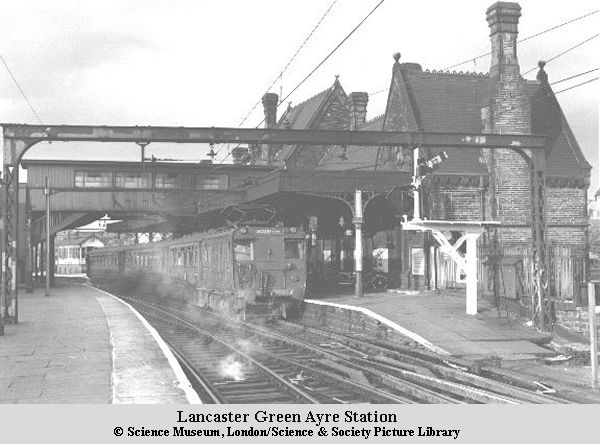
I can’t find a picture of an actual “Quarter to Niner” train, but this shows the interior of the station, with a local electric train at the relevant platform at Lancaster Green Ayre station.
 |
“All games cancelled. Anyone who wants to run may use the Splash Baths.” Daft notice.
What’s this: sarcasm at 13 years old, young Forbes? Well, yes, it was. The point I was making was that rugby on a muddy field in January, just after a snowfall, was not, let’s say, the most attractive concept. So the prospect of a Thursday afternoon completely free not only of lessons, but also of cold mud or rain Thursday afternoon was magic! Given this, who would voluntarily go for a cross-country run (never pleasant over the muddy fields, hills and lanes between LRGS and Caton), even if they could enjoy a warm bath in the Splash Baths afterwards? “Lower Firs”, “Upper Firs”, “The Ridge”, “Junior Set” and, God forbid, the “Senior Set”. Bring back any painful memories? No, we saw that notice at about noon, and were long gone by 1 pm, after lunch, in my case off to a warm fire and Meccano set at home.
Just as a footnote to this Chapter, and as an illustration of the family regime, this time from my father’s side, there was that day of light snowfall later in January 1953. The motorcycle pillion seat so misunderstood by Miss Rogerson was firmly affixed to the rear mudguard of Dad’s Royal Enfield (predecessor of his Triumph Twin). The problem was, that, perched jauntily behind Dad, I wasn’t too securely fixed to the pillion seat. As Dad turned out of the drive onto the snow-covered Halton Road on our way to Skerton School, and his to Lune Mills, the back wheel slipped sideways just a little, and I promptly fell off. Silent pause. Without comment from either side, as the incident was clearly to be regarded as a function of my own incompetence, I rapidly popped back onto the pillion, and we moved slowly off again towards Town. But only a hundred yards later, the back wheel spun again as the bike started up the slope of the Canal Bridge. Off I tumbled anew, and this time Dad, a tall, taciturn Fifer, was moved to speech. “You’re not really trying very hard, are you?” was the dry comment.
 |
Some illustrations via Science & Society Picture Library http://www.nmsi.ac.uk/piclib/